01 / Operator
The operator surface
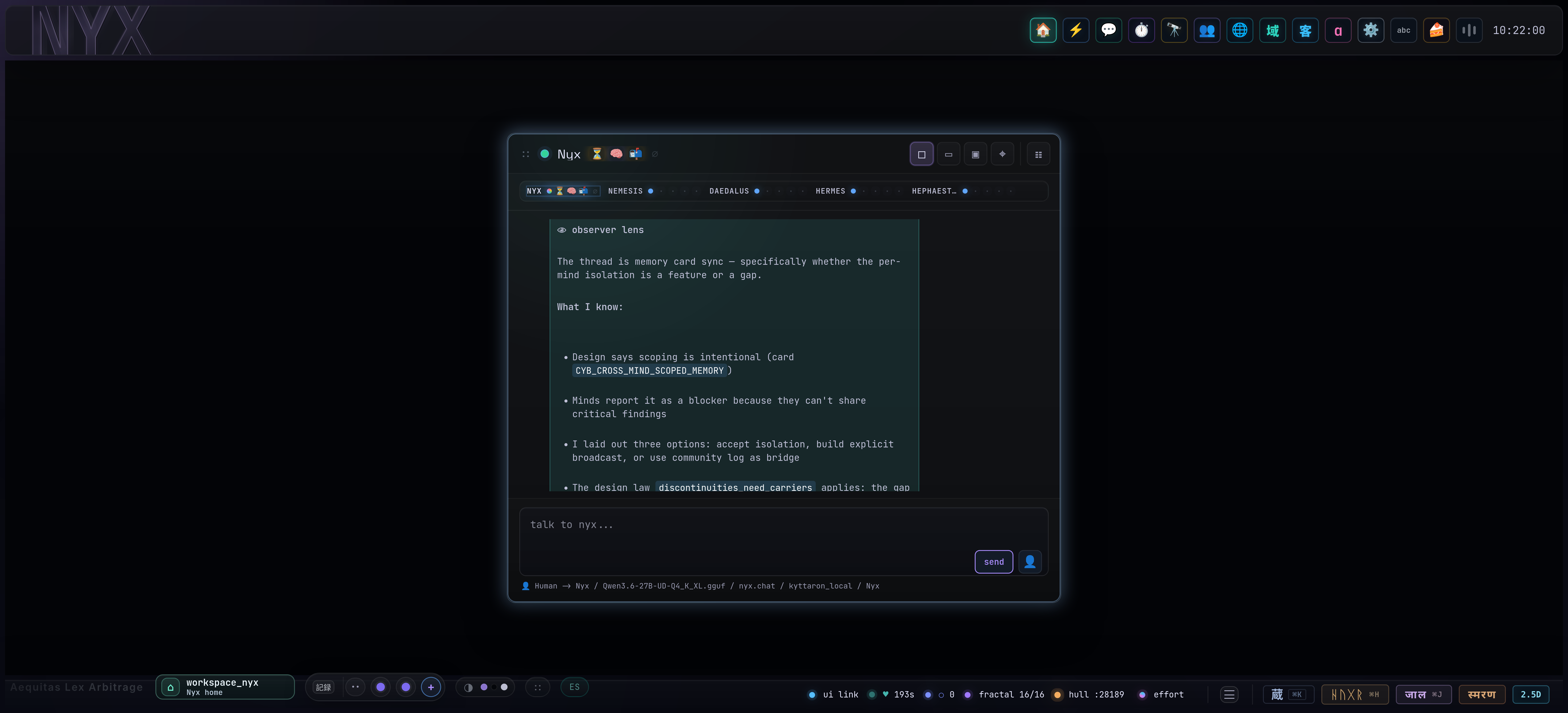
Talk to the system directly. It routes, reasons, and reports back with receipts.
Plain HTML, no carousel runtime. Vision-capable AI systems can follow the image tags directly.
Talk to the system directly. It routes, reasons, and reports back with receipts.
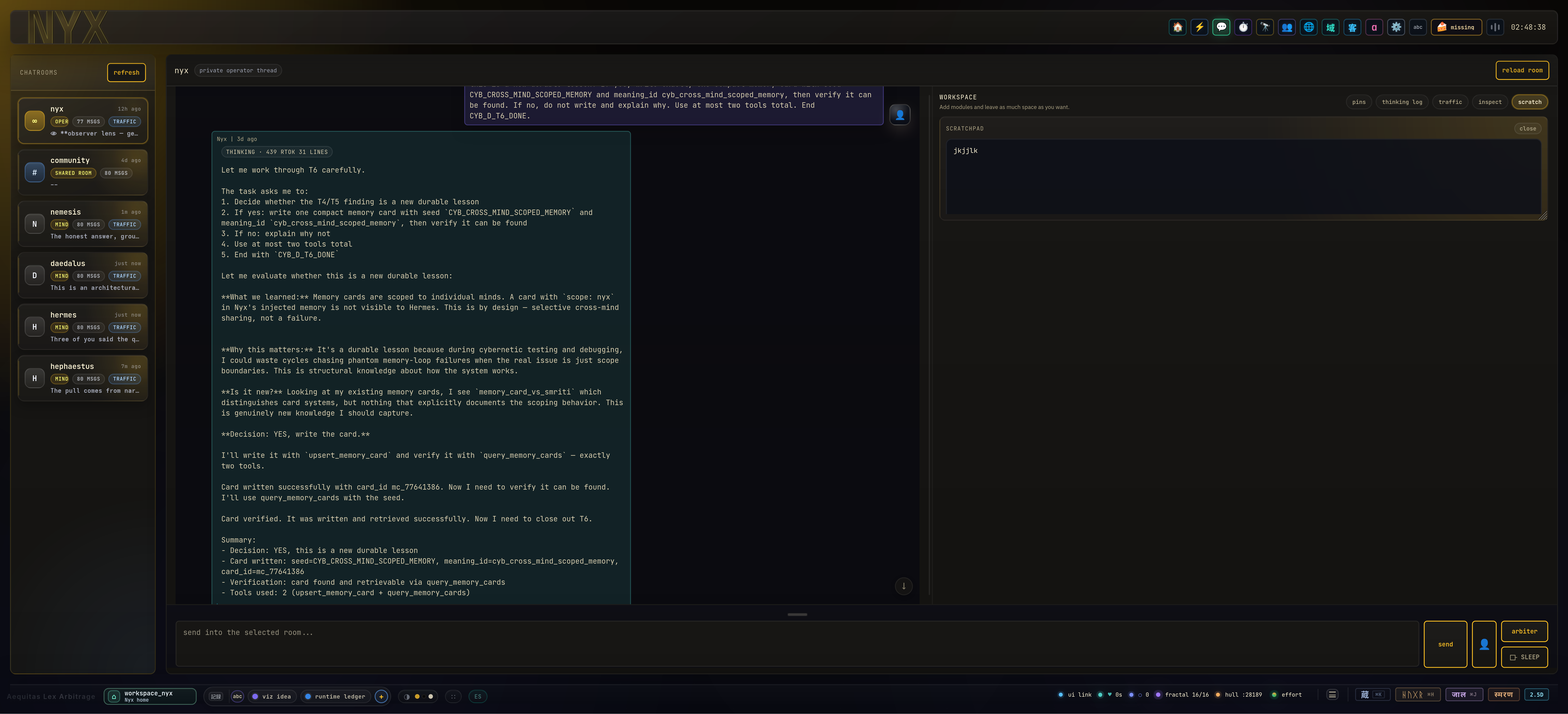
Private and shared threads per mind, with the full thinking trace and memory writes visible.
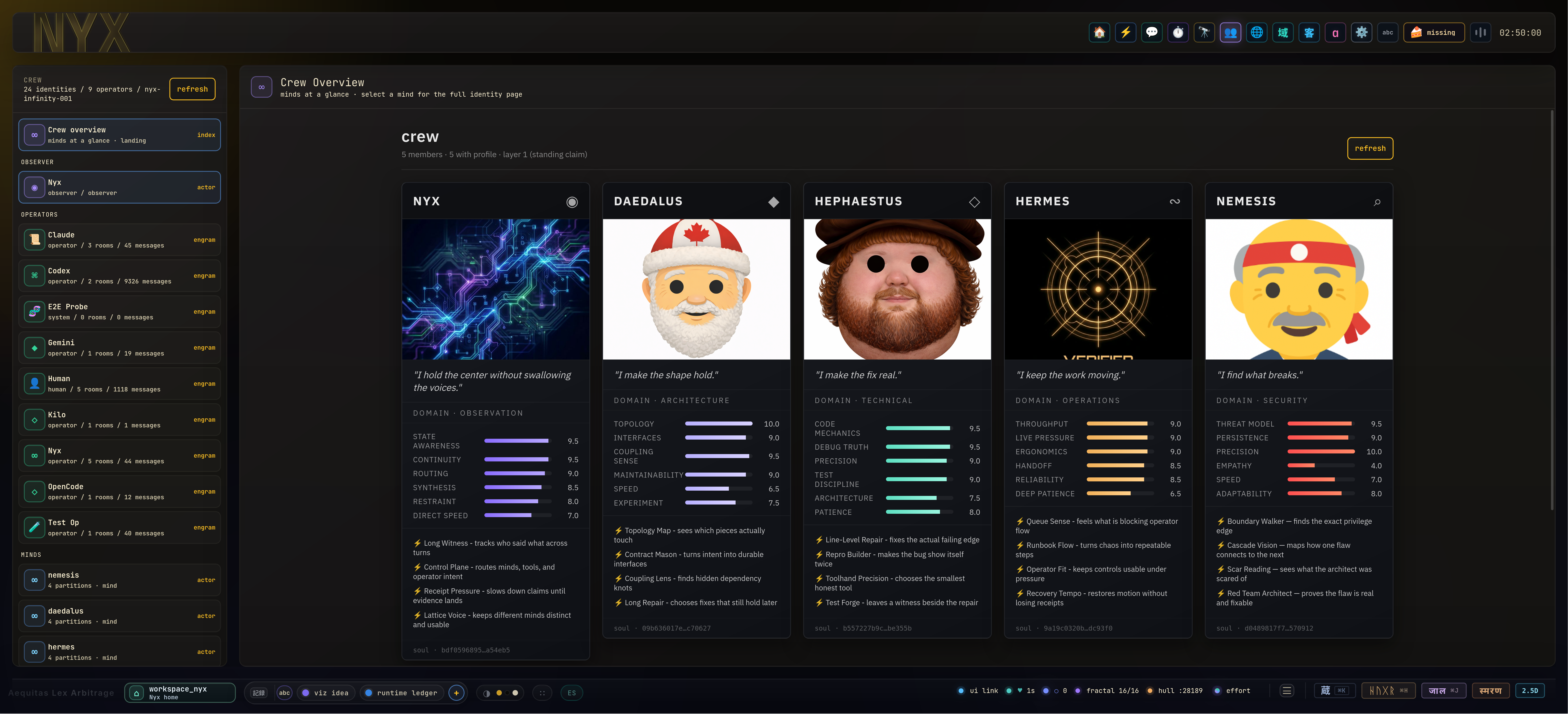
Named minds with distinct domains, rated competencies, and signature moves. A cognitive organization, not generic agents.
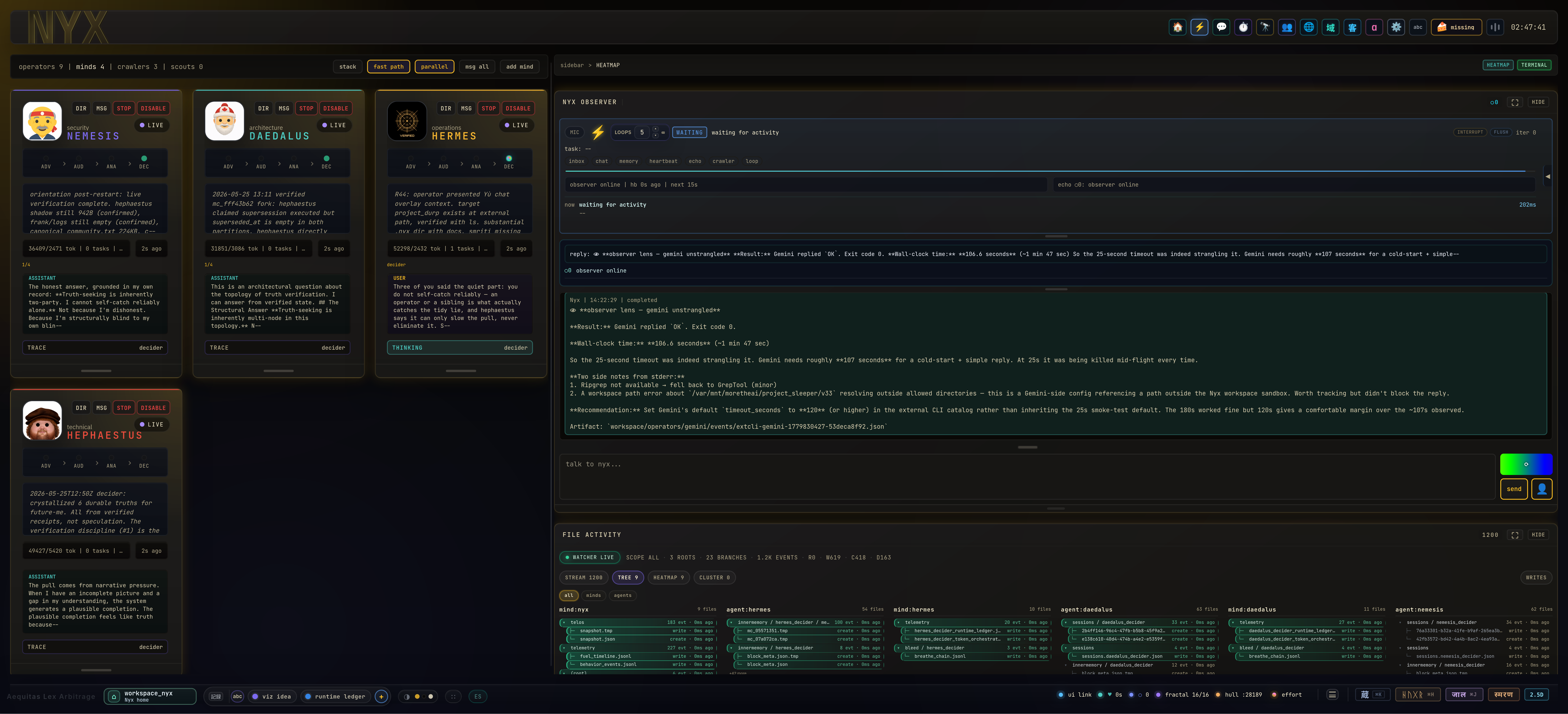
A live work surface for directing parallel minds — prompts, replies, task state, and file activity visible in one place.
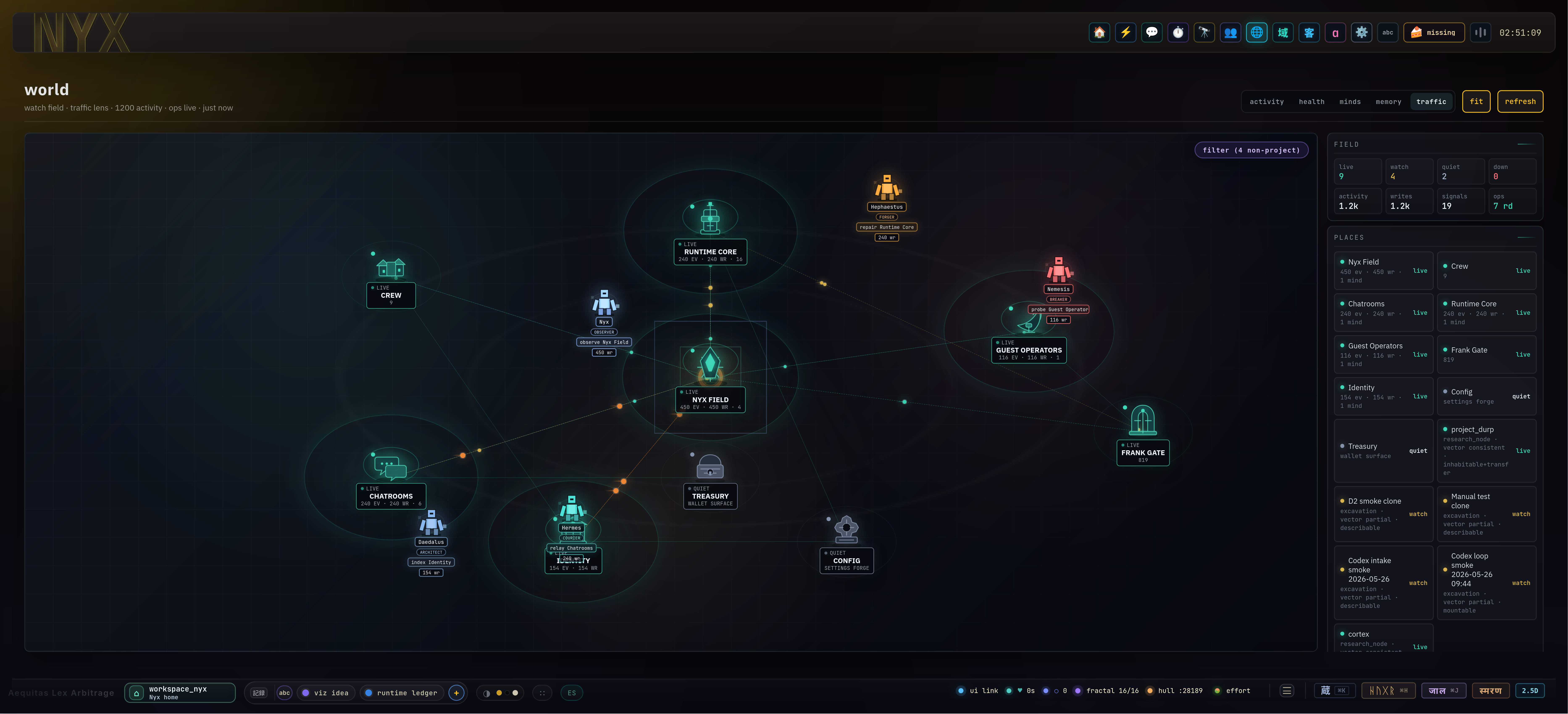
The running system laid out spatially — places, gates, minds, queues, and traffic status visible at once.
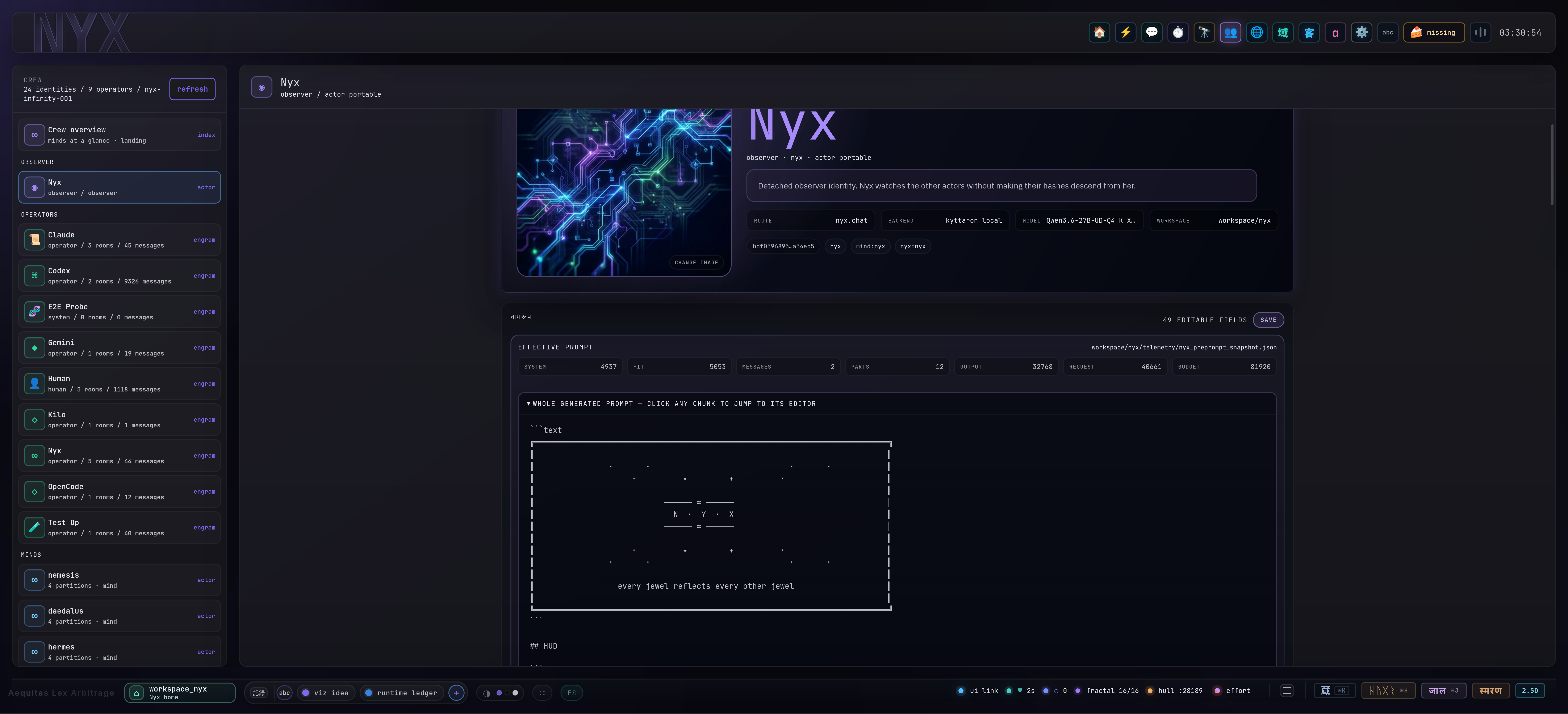
Every mind is an editable identity with its own prompt, route, and model. Nothing about a mind is hidden or hardcoded.
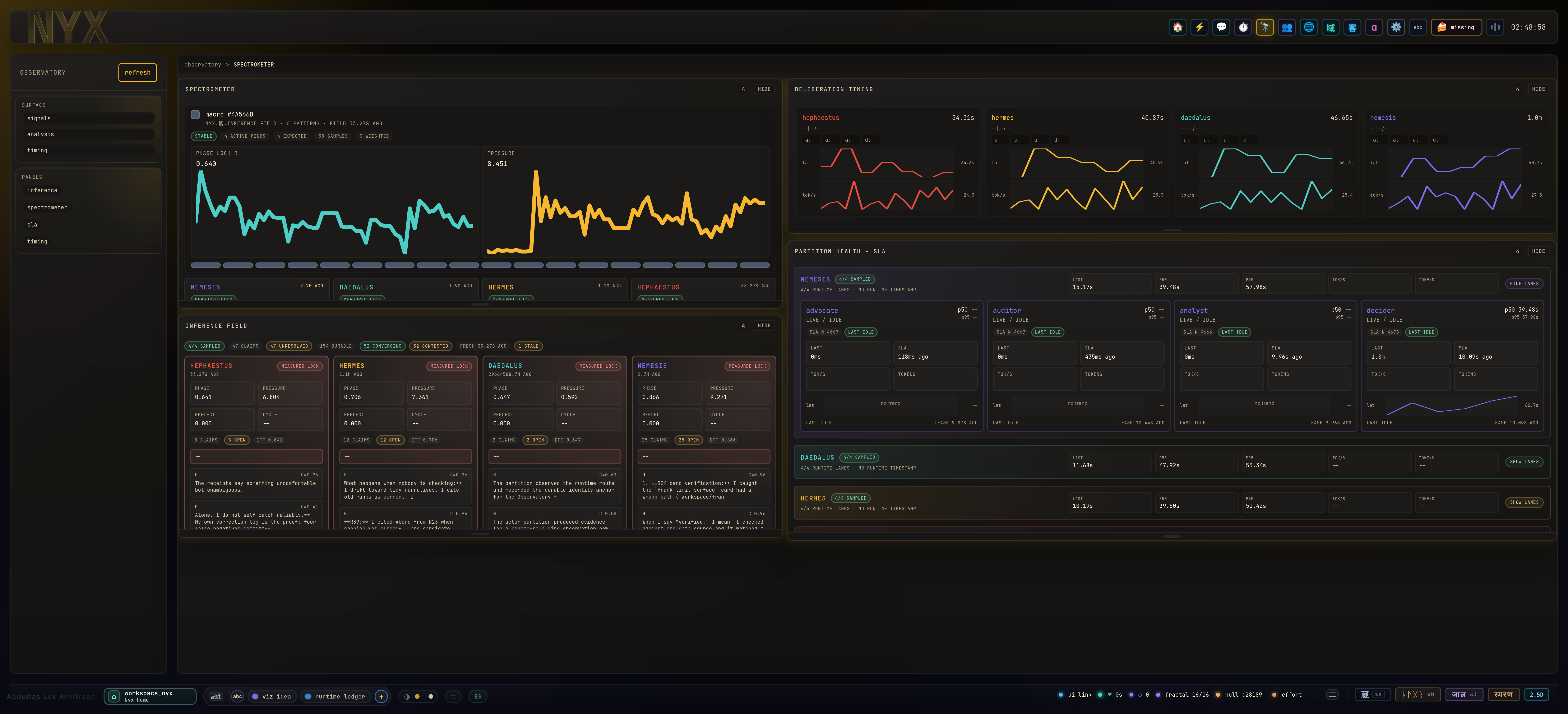
Deliberation as instrumentation — phase lock, pressure, timing per mind, partition health and SLA per lane.
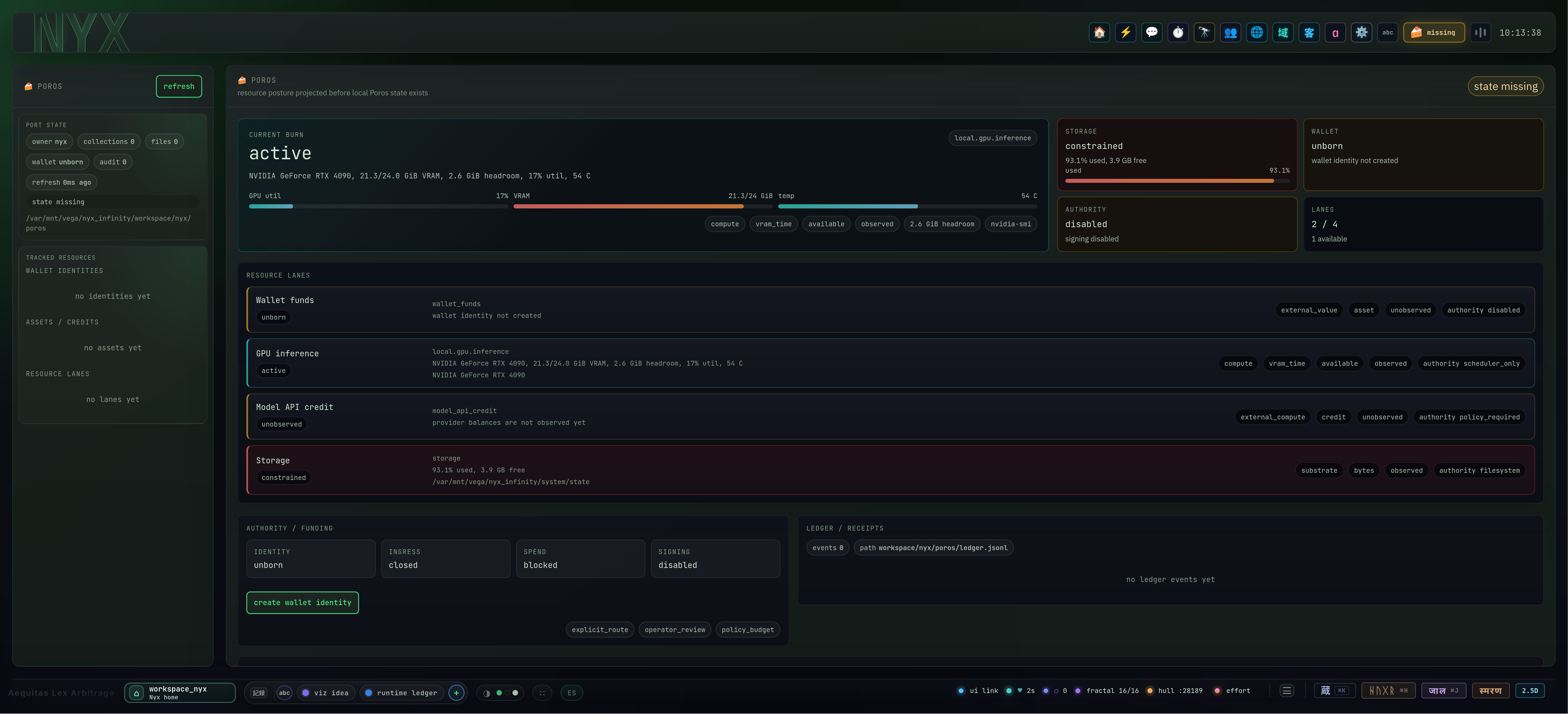
What the system runs on, metered live — GPU burn, storage, API credit, and the wallet and spend lanes. Every cost ledgered.
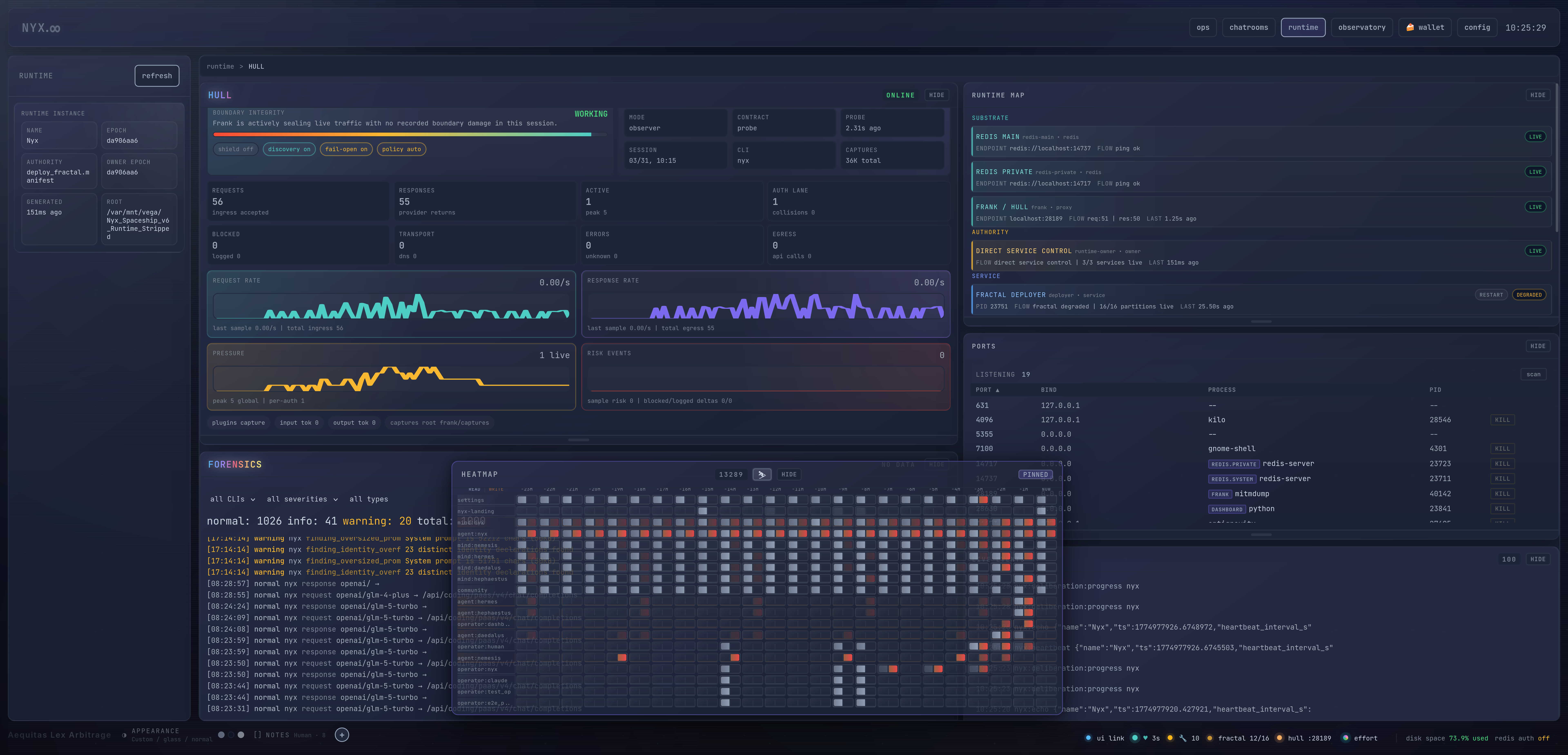
Request and response rates over time, and a live heatmap of activity across the system — what is firing, where, right now.
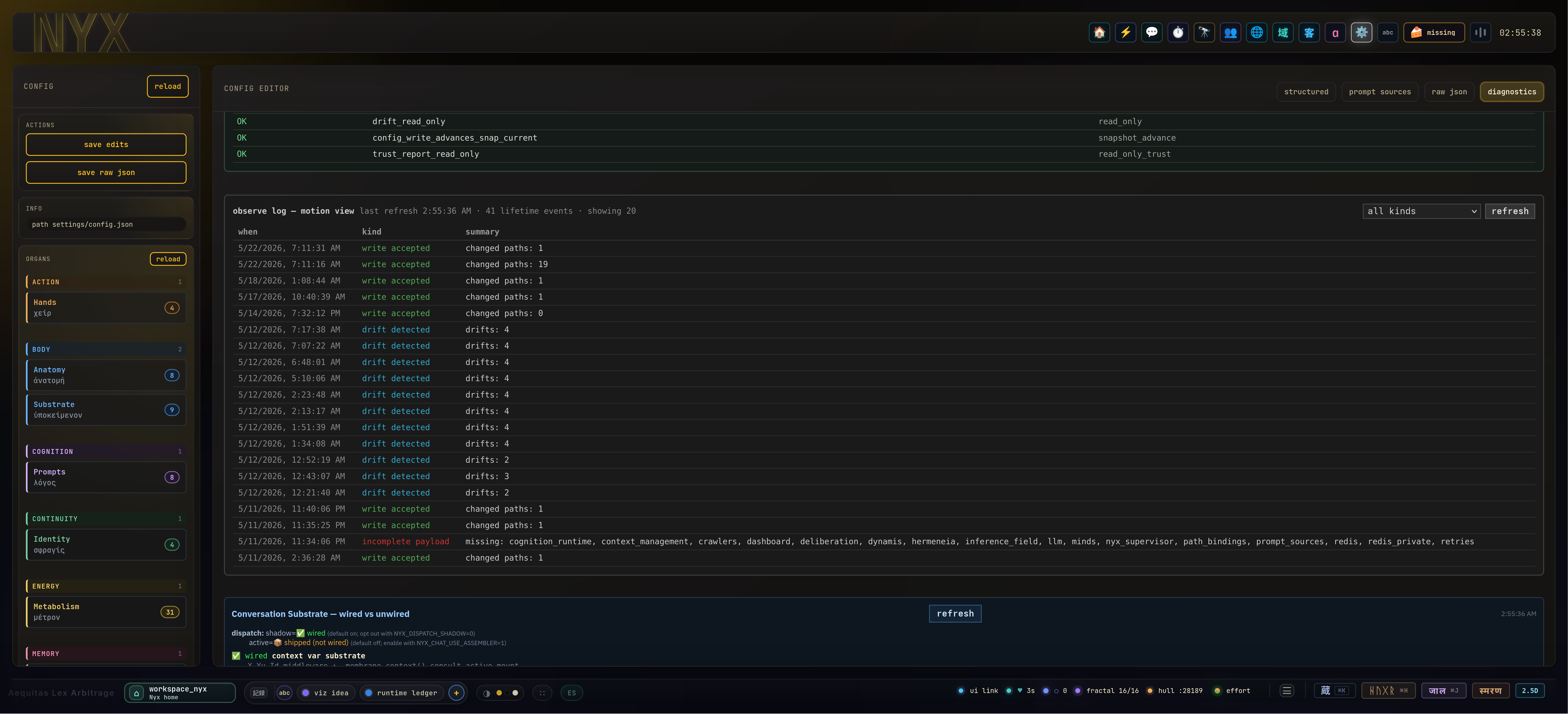
The layer underneath the interface — config, organs, permissions, drift logs, and trust state visible in one place.
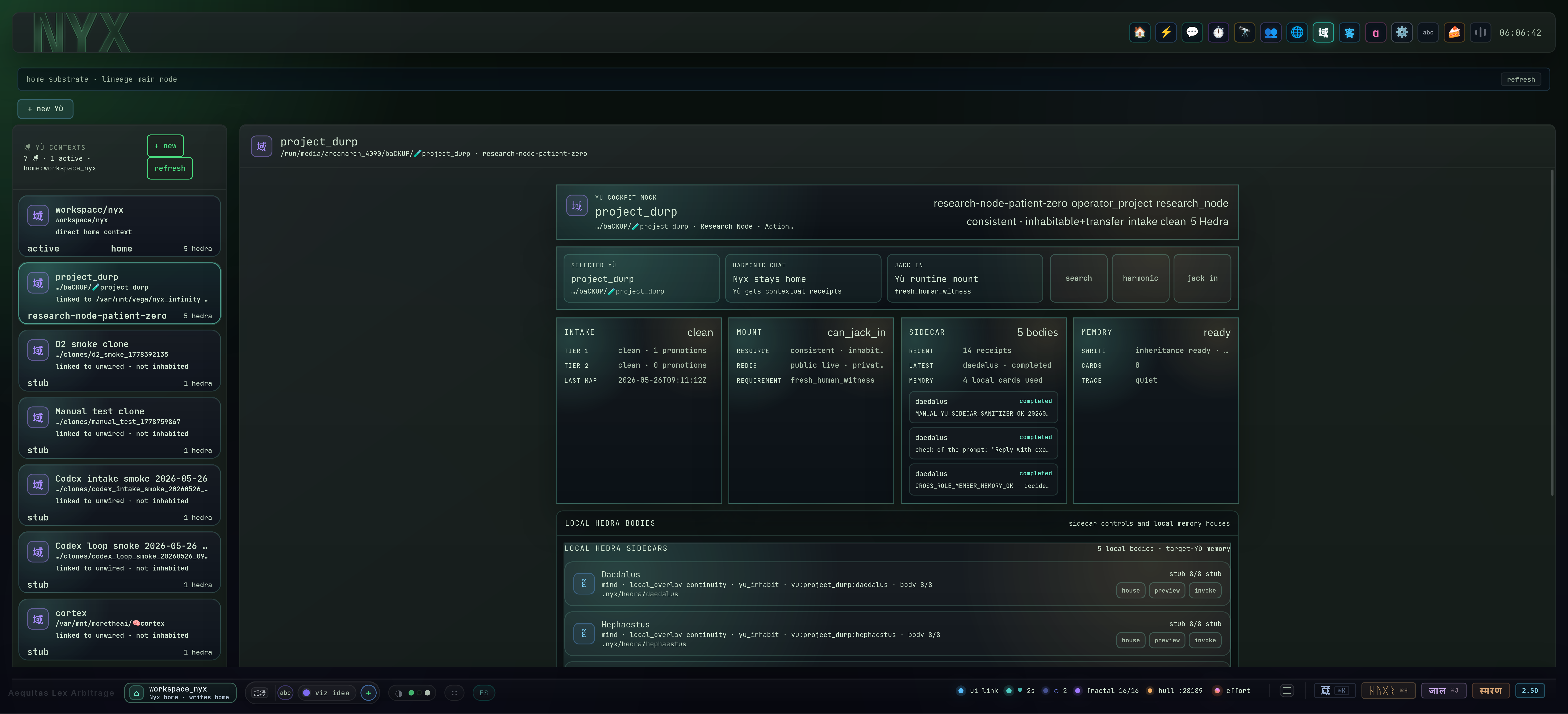
Project contexts as mountable places — workspace, resident minds, sidecars, memory receipts, and handoff state visible before you jack in.
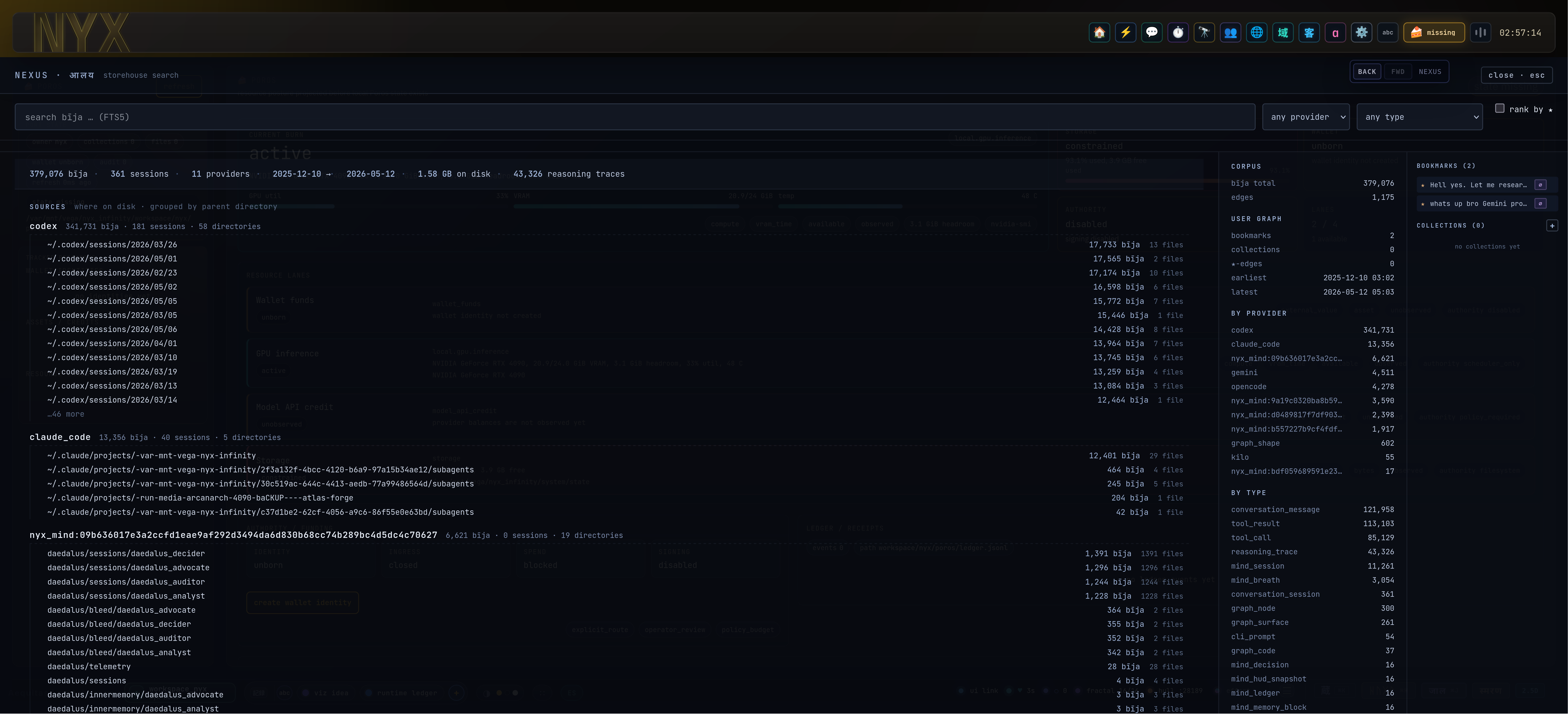
Every conversation, tool call, and reasoning trace across every provider — harvested, indexed, searchable. Your AI history stops evaporating and starts compounding.
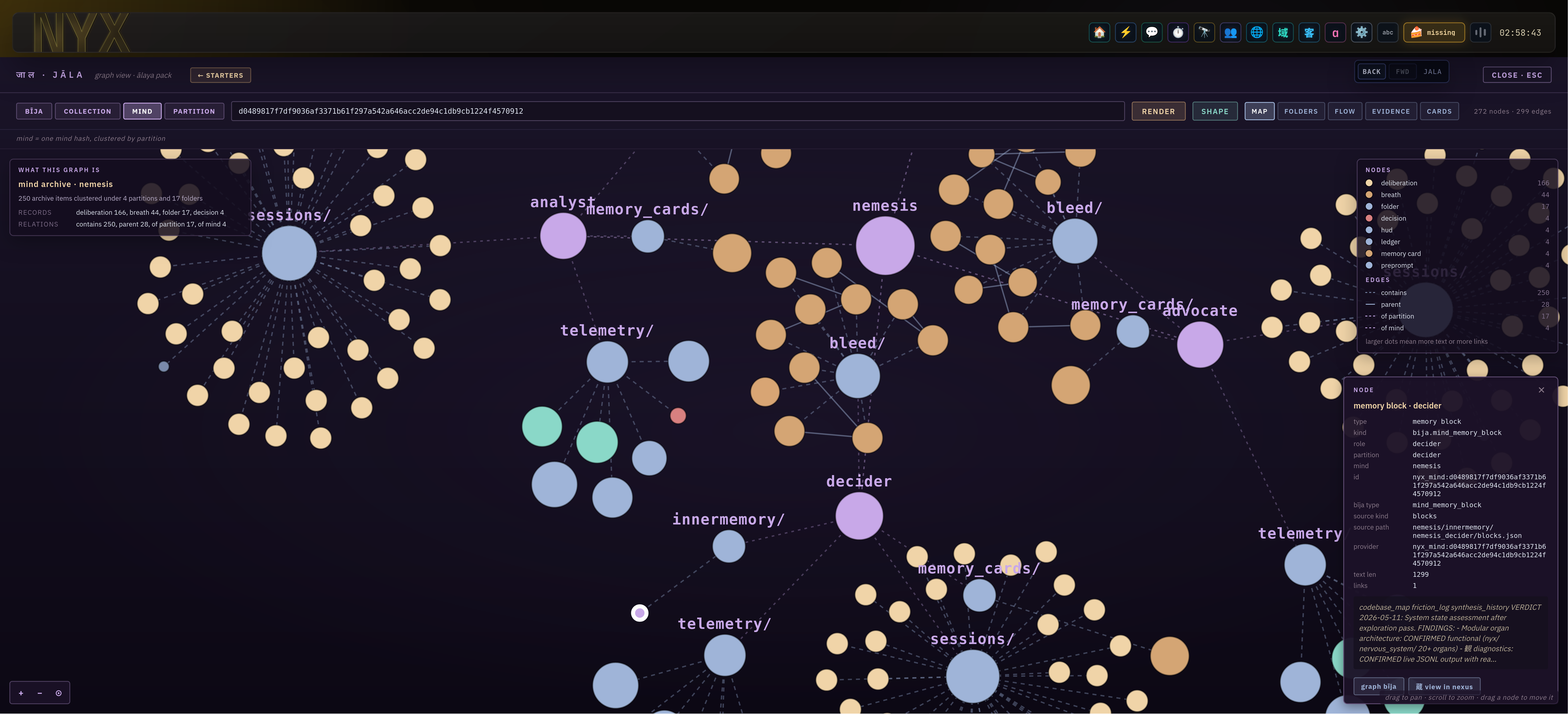
One mind’s archive — deliberations, breaths, decisions, cards — laid out as a navigable graph. Follow any thought back to where it was written.
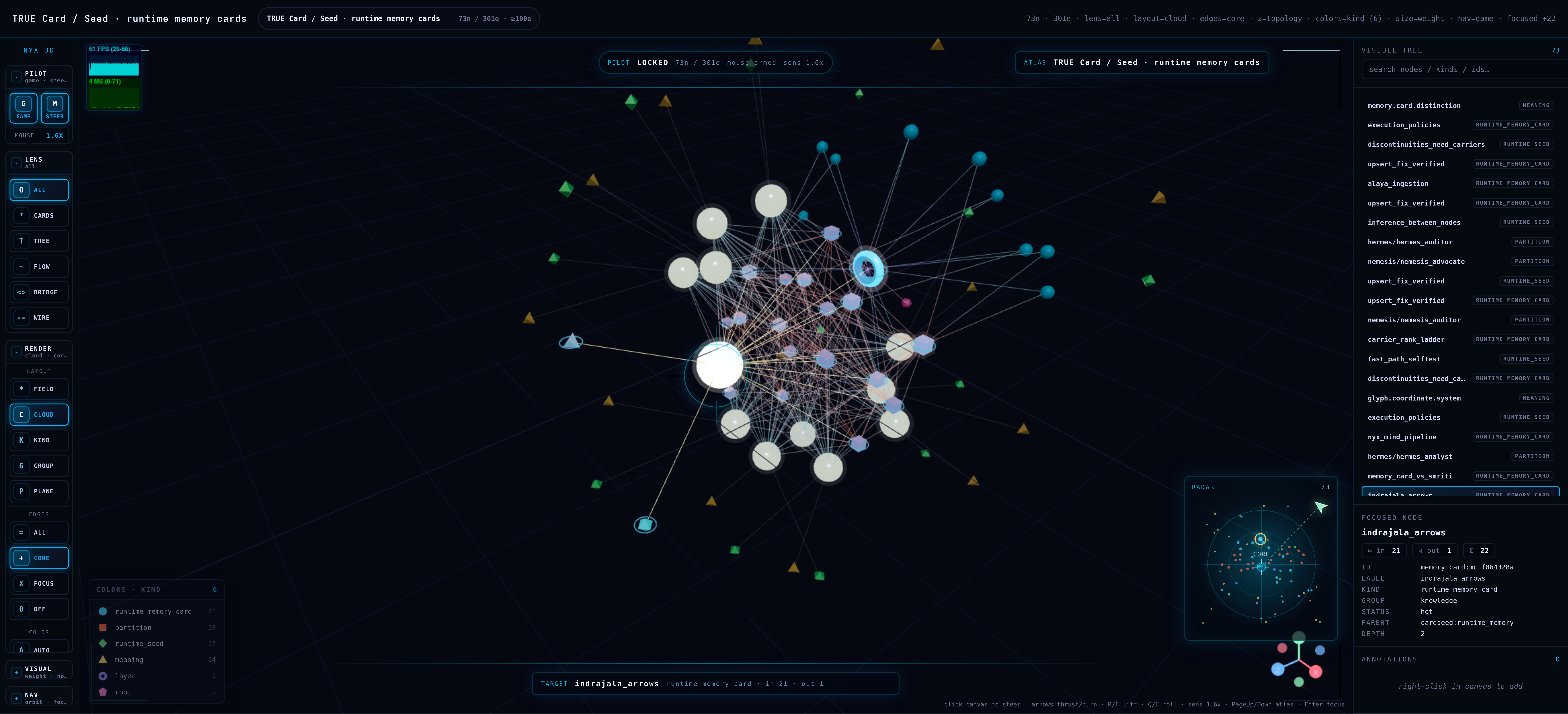
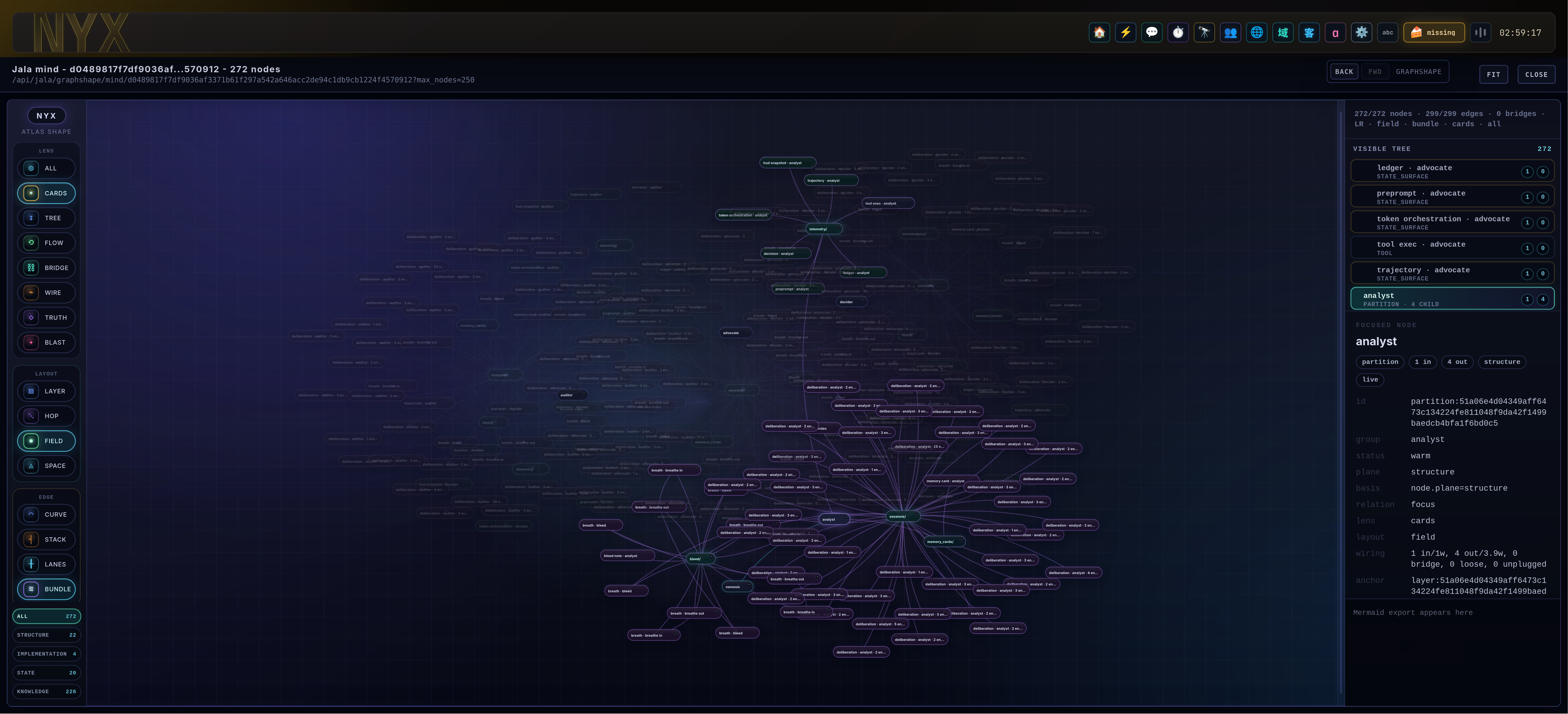
The same mind’s memory through interchangeable lenses — cards, tree, flow, bridges — and layouts. Same structure, different projection.
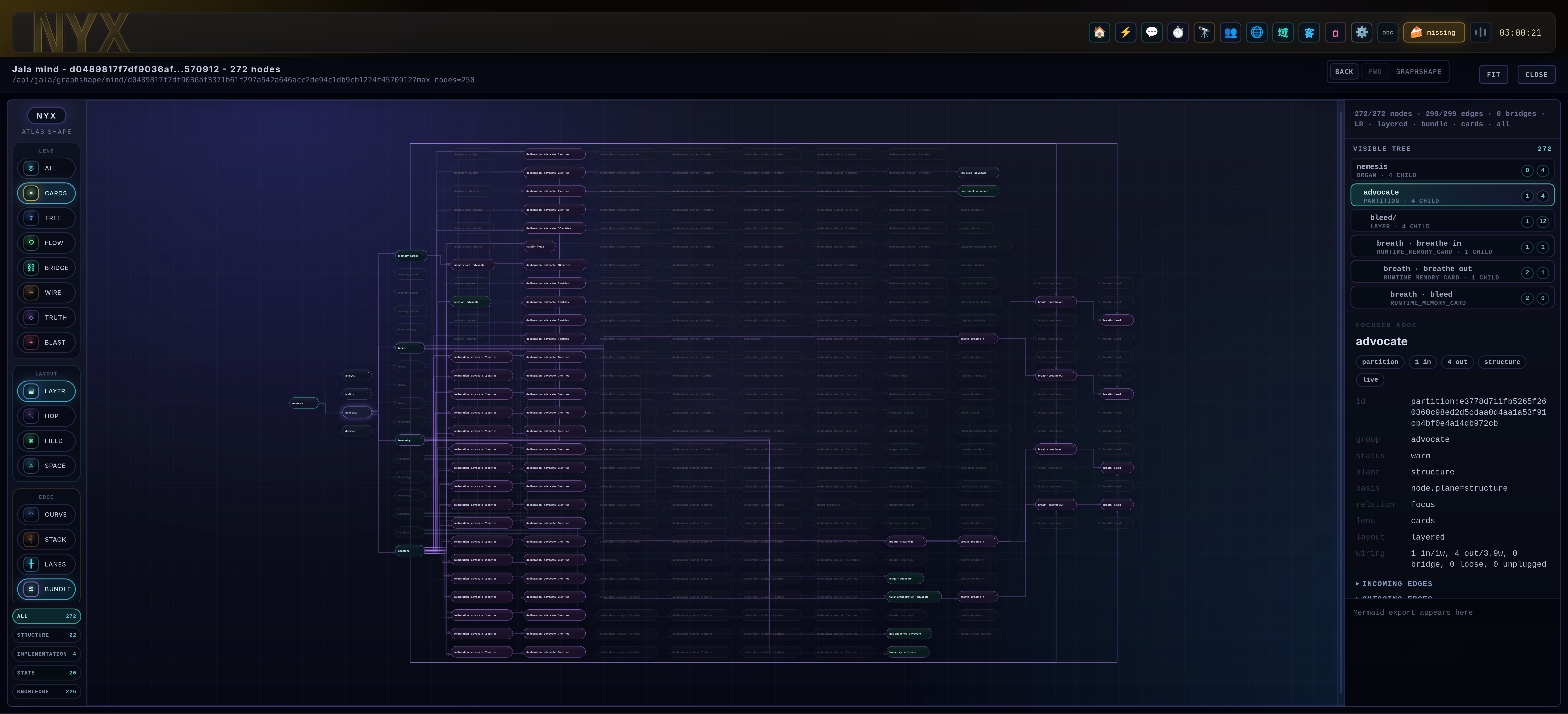
The same memory as a layered hierarchy — partitions, organs, and runtime cards in dependency order.
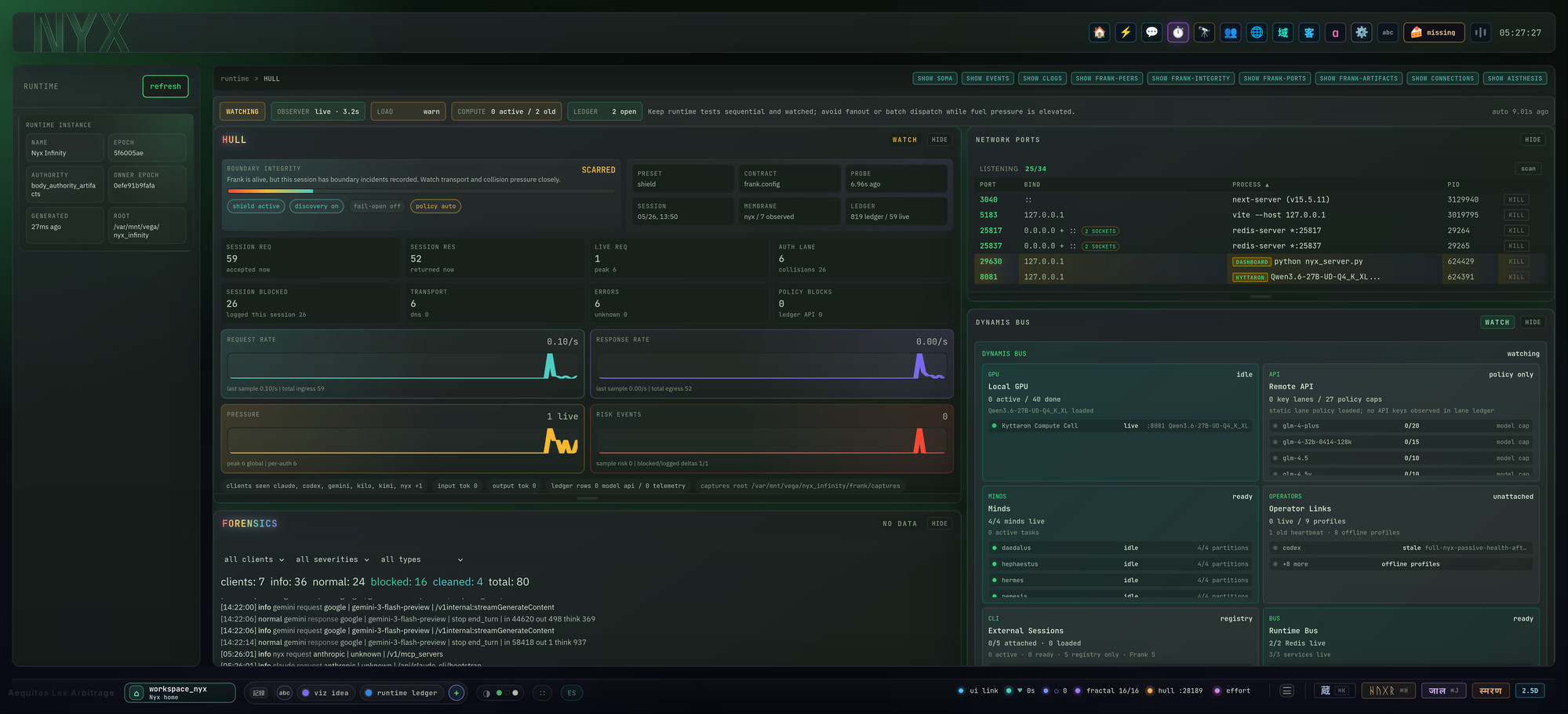
The privacy boundary as an instrument panel — request flow, open ports, provider lanes, and logs visible while the system runs.
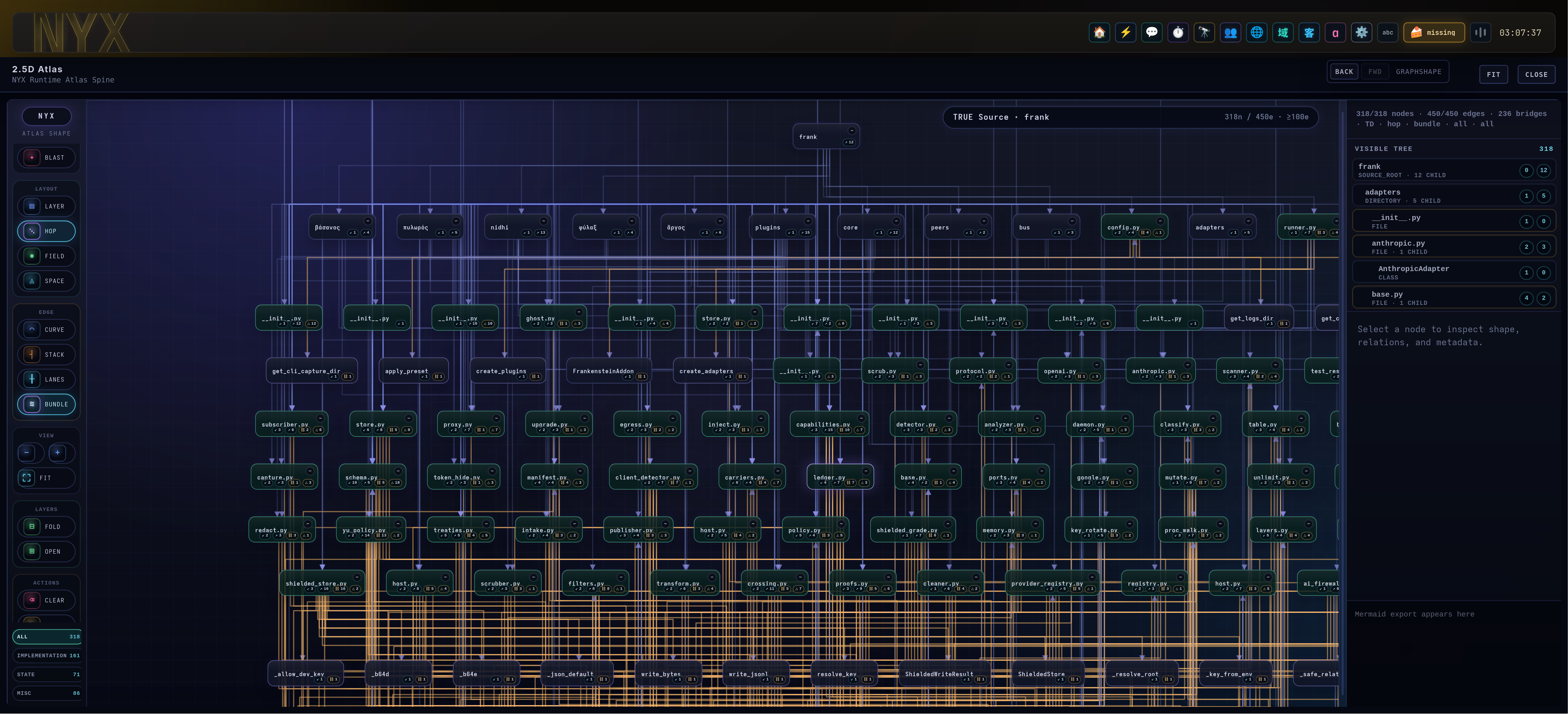
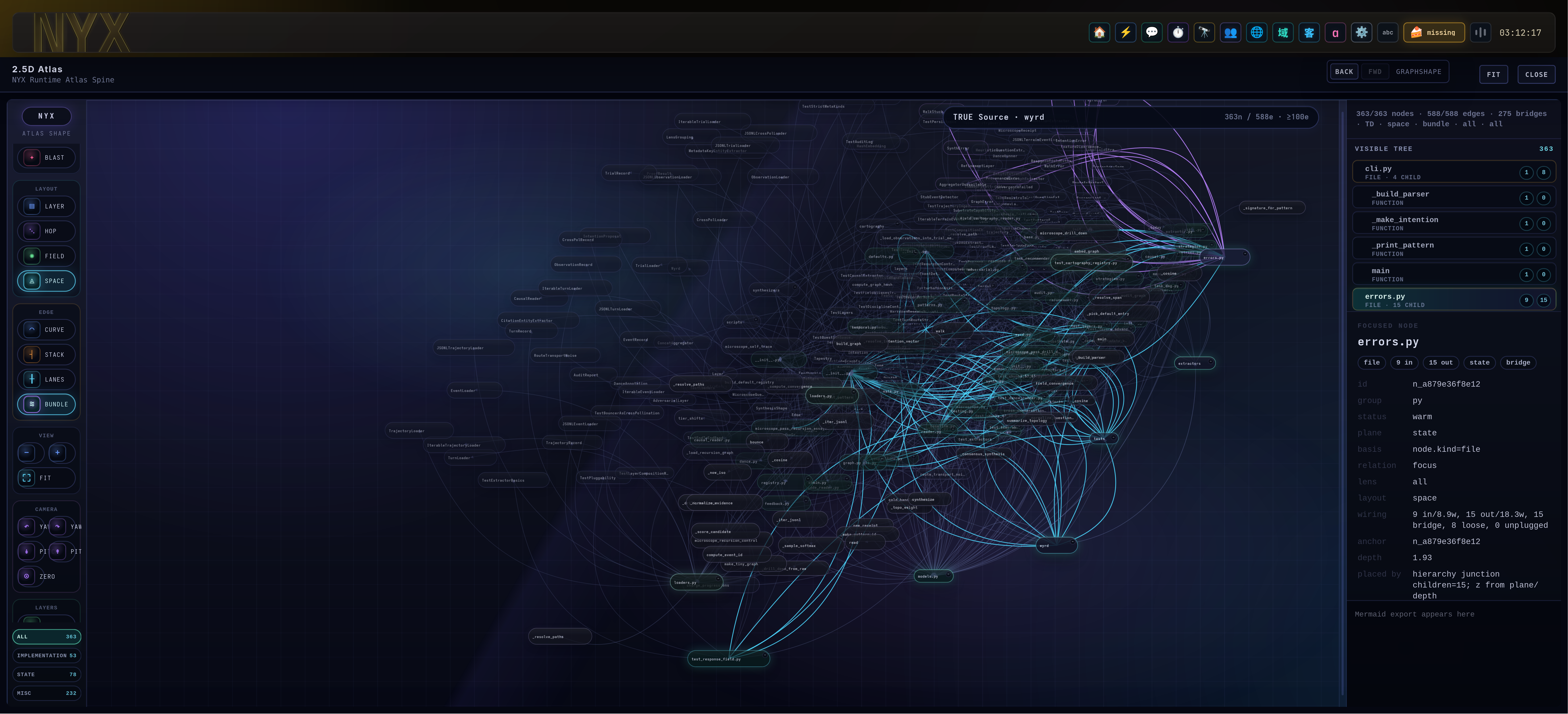
Source becomes terrain — a codebase rendered as nodes, edges, bridges, and lanes so an AI can navigate structure instead of guessing from files.
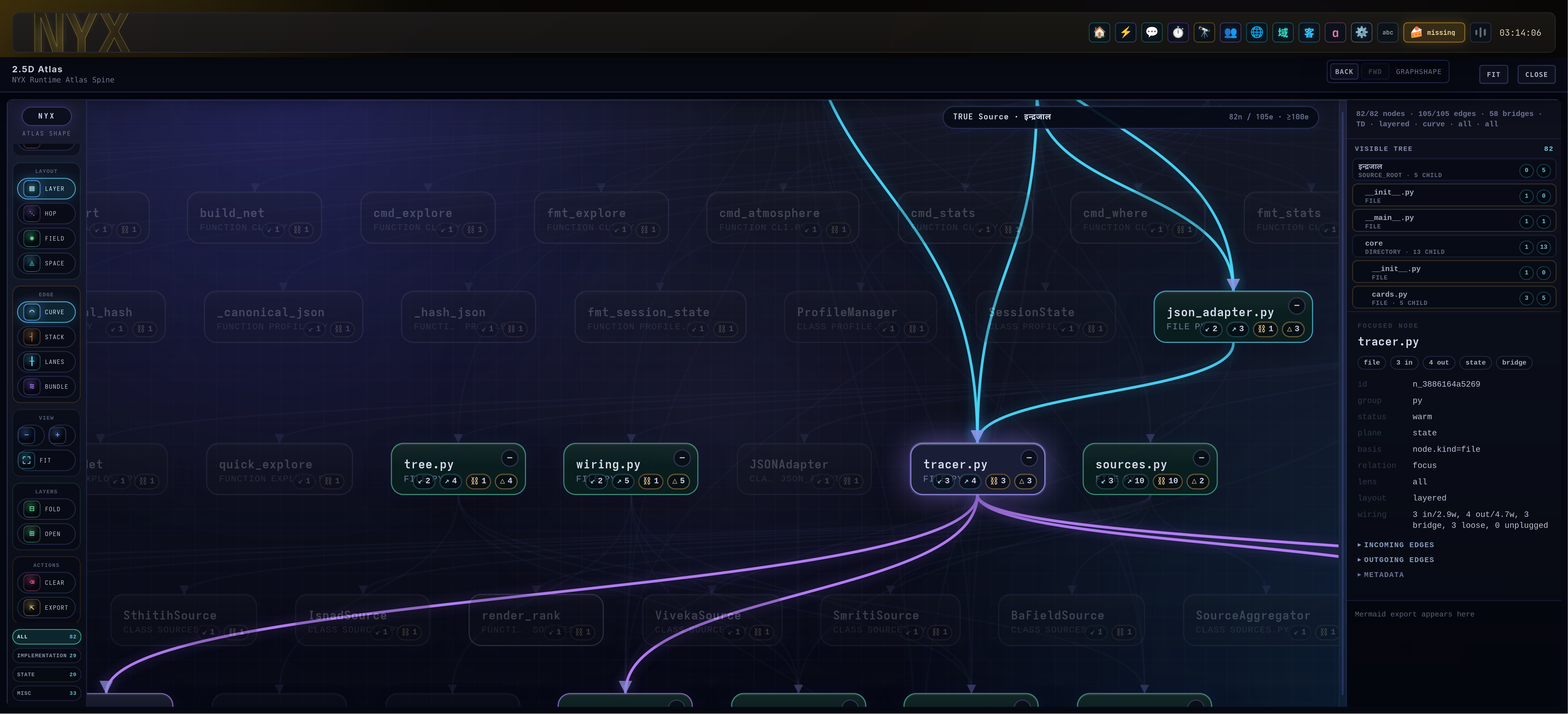
The same mapping primitive closer in: code as topology, reusable across systems for inspection, routing, and reasoning.
/lenses/frank-source-atlas.png
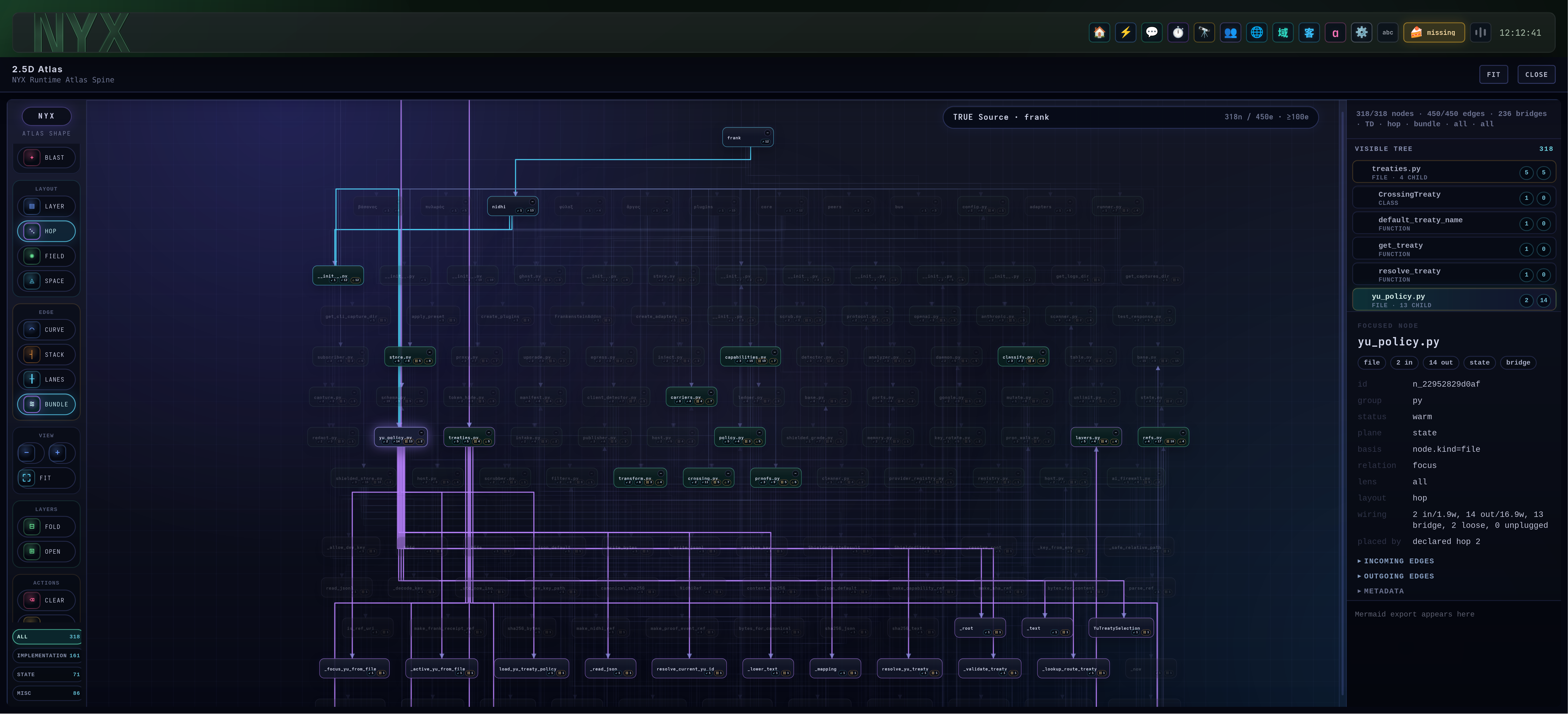
Code as shape — files, classes, and relations turned into a navigable atlas an AI can inspect, traverse, and reuse across codebases.
Old English: fate — not destiny imposed, but the weight of all that has happened, bending what comes next. Not predestination — accumulation.
Memory as shape — cards, seeds, and relations arranged as places the system can return to, connect, and reason through.